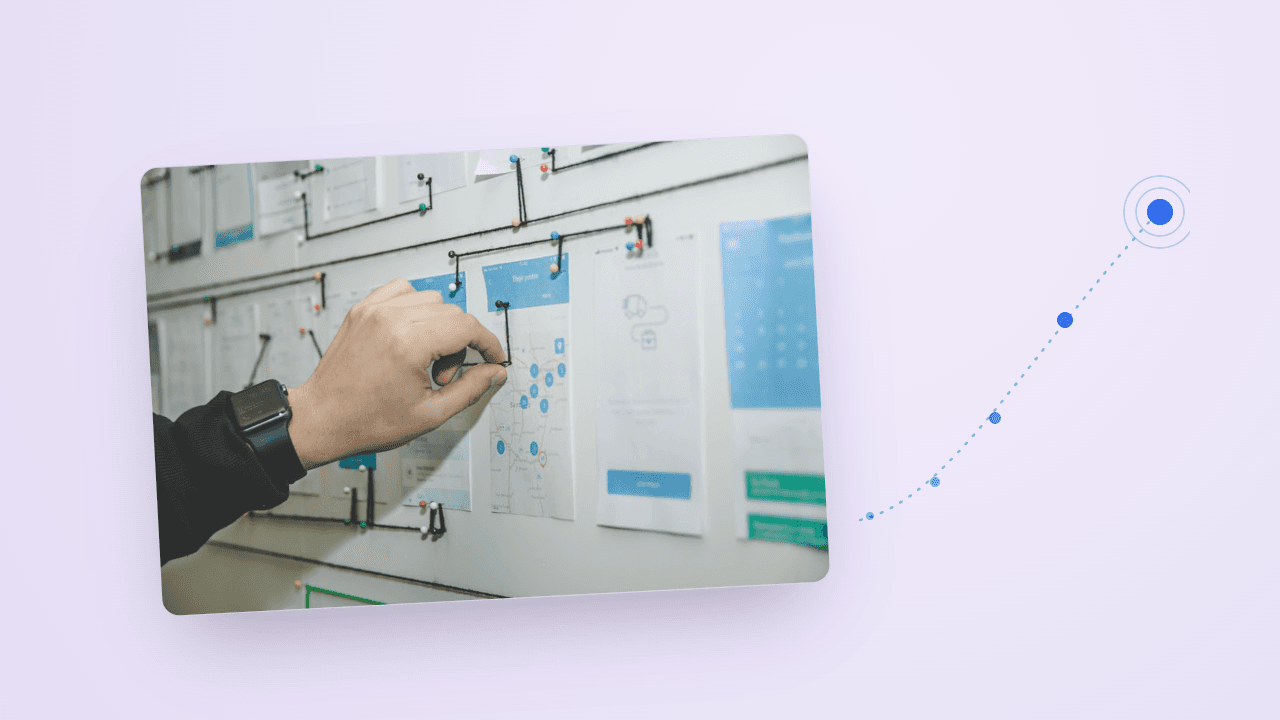
The default startup sequence is: build the product, then go find people to use it. Distribution is the thing you bolt on at the end, usually in a panic, usually too late, usually with a launch post and a prayer.
We ran it the other way. At Werk, a venture-backed collaboration tool for remote teams, we treated distribution as a 0 to 1 problem in its own right, something to build deliberately before the product was ready for the world. By the time we opened the doors, the audience was already standing outside them.
This is the case study of how, what worked, what did not, and what I would tell any early team that thinks distribution is a launch-day concern.
The premise nobody wants to accept
Founders fall in love with the product because the product is the part they can control. Distribution feels like luck, like something that happens to you if the product is good enough. So it gets deferred.
A great product with no distribution loses to a mediocre product with great distribution, every single time. The market does not reward the best thing. It rewards the thing people actually find.
The reframe that changed how we worked: distribution is not a megaphone you pick up at the end. It is an asset you compound from the beginning. An email list, a community, a reputation in the right circles, these take months to build and zero days to wish you had. So we started building them while the product was still half-finished.
What we did, in order
The plan was simple to describe and hard to sustain: spend the build phase manufacturing demand instead of just manufacturing software.
Step one: a waiting list with a real reason to join
Not a generic "coming soon" box. We built a landing page with a no-code tool, integrated a waiting list, and gave people a concrete reason to be early, access and influence over a product built specifically for the way they already worked. The waiting list was not a vanity counter. It was the first cohort, and we talked to them.
Step two: go where the audience already gathers
We did not try to summon an audience from nothing. We went to where remote-work people already spent their attention.
- Reddit was the highest-leverage channel by a wide margin. The exact people we wanted lived there, engaged deeply, and rewarded genuine participation over promotion.
- Startup aggregators like the upcoming sections of launch platforms and beta-listing sites put us in front of early adopters who want to find new tools.
- Founder networks. Our co-founders had real reach, and a warm personal message converts at a rate no cold campaign ever will.
Step three: build the content the funnel actually needs
You cannot point a waiting list at an empty page. We prepared content mapped to the journey: a product video that carried the value proposition, pieces on asynchronous and remote work that earned attention on their own merit, and email flows to keep the early cohort warm while the product caught up to the promise.
The results, honestly
About two months of this, running in parallel with the build, produced the number that mattered.
| Metric | Outcome |
|---|---|
| Time spent building distribution | ~2 months, parallel to product |
| State at public launch | Audience already assembled |
| Users at launch | 1,000+ |
| Companies represented | 350+ |
| Primary acquisition channel | Reddit and personal outreach |
We went public and welcomed over a thousand users from more than three hundred and fifty companies on day one, not because the launch was magic, but because the launch was the end of a distribution effort, not the start of one.
What I would do differently
Honesty matters more than a clean story, so here is what was not perfect.
- We could have talked to the waiting list even more. Every conversation with an early signup was worth more than another marketing asset. We treated outreach as a channel when it was really research.
- We leaned on founder networks heavily, which works once and does not scale. It bought us the first cohort but it was not a repeatable engine, and we knew it.
- We underweighted owned search early. The Reddit and outreach motion was fast but rented. A search footprint compounds, and starting it earlier would have paid off later.
The principle that generalizes
Strip away the specifics of Werk and the lesson is portable to any 0 to 1 effort:
Start the slow assets first. Distribution, audience, and trust all have long lead times and short regret windows. The product can be built in a sprint. An audience cannot. So begin the thing with the longest delay the day you begin, which is almost always earlier than feels comfortable.
If you are pre-launch right now and you do not have a single channel that can reach your future users, that is not a launch problem you will solve later. It is a today problem wearing a disguise.
The takeaway
Do not build the product and then go looking for an audience. Build the audience while you build the product, so that launch day is a harvest, not a gamble.
Distribution is a 0 to 1 problem. Treat it like one, start it early, and the hardest part of going to market is mostly solved before you ever go to market.